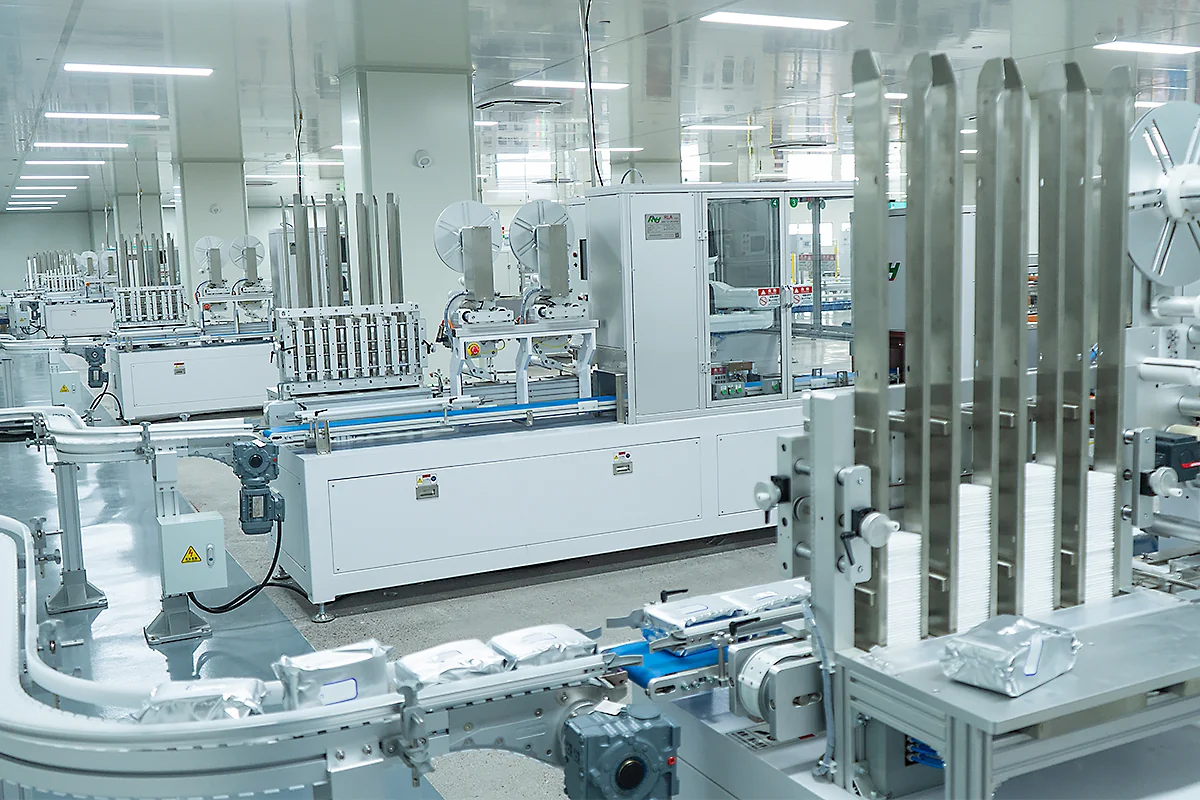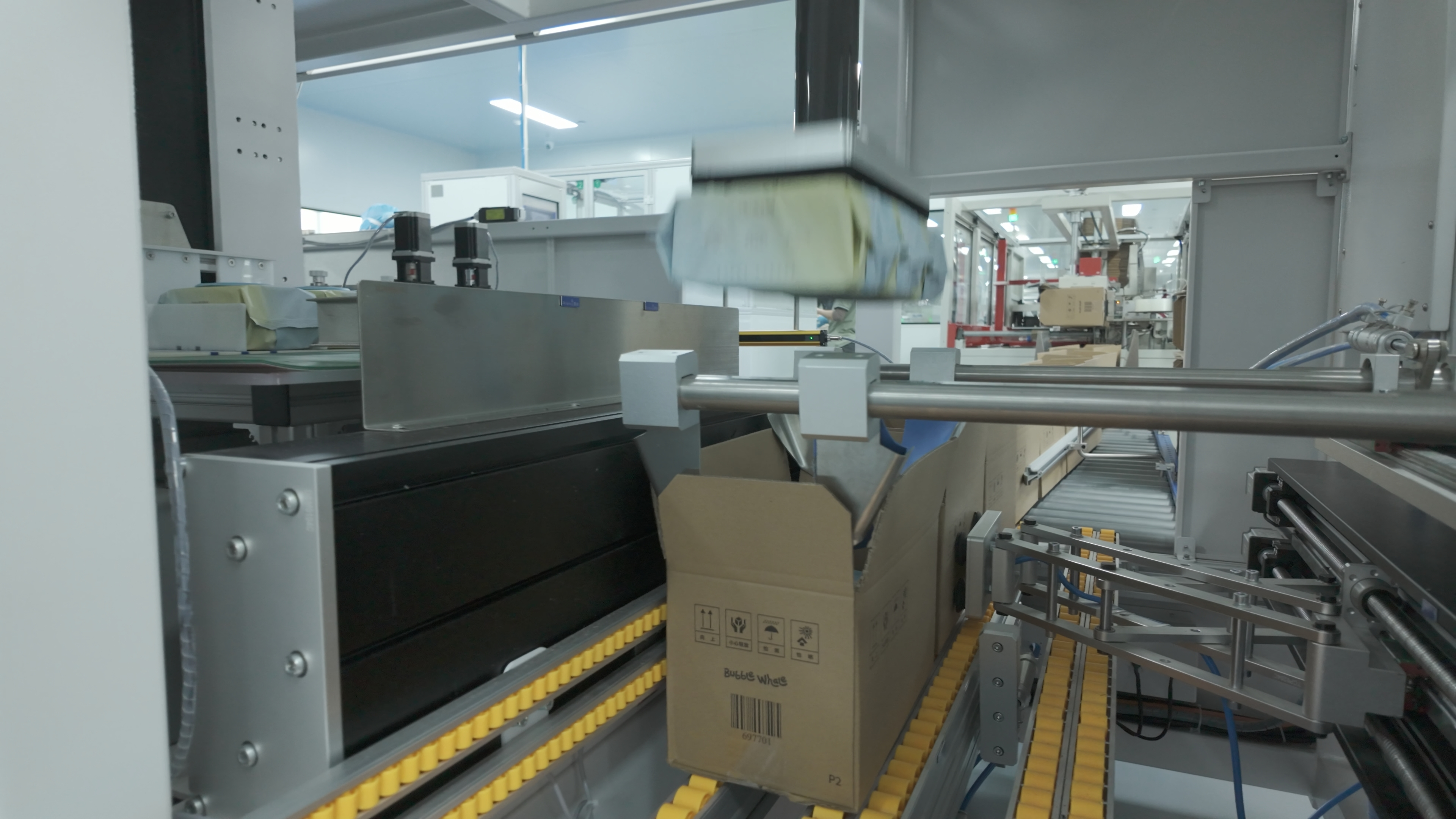



Cross-fold wet wipe machinery is often discussed in terms of speed, but in real manufacturing environments, throughput depends on a combination of equipment design, material handling, and process stability. As a wet wipes machine manufacturer, ZLINK approaches throughput as a practical production metric rather than a theoretical maximum. In daily operations, realistic output is defined by continuous running capability, consistent folding accuracy, and controlled moisture application. When evaluating a wet wipes manufacturing machine, manufacturers need to understand how cross-fold technology performs under long production cycles rather than short test runs.
How Cross-Fold Design Influences Throughput
Cross-fold systems are widely used in baby wipes and hygiene wipes because they allow smooth dispensing and compact packaging. From our experience as a wet wipes machine manufacturer, realistic throughput is closely linked to folding structure, servo motion coordination, and web tension control. Cross-fold wet wipe machinery must maintain precise alignment across multiple lanes to avoid stoppages or rework. In a well-configured wet wipes manufacturing machine, stable folding and synchronized cutting allow output to remain consistent even when material thickness or lotion viscosity changes within normal ranges.
Practical Throughput Considerations in Daily Production
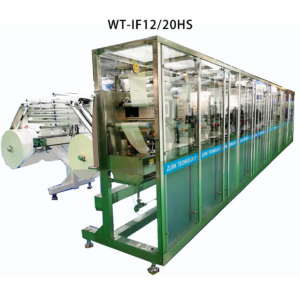
In real factories, throughput is affected by more than mechanical speed. As a wet wipes machine manufacturer, we see that operator familiarity, material quality, and preventive maintenance all play a role. Our WT-IF Series – High-Speed Multi-Lane Baby Wipes Production Line is designed to support stable output through multi-axis servo motion control and hygienic layout. Electrical safety follows CE standards, while quality-focused features help reduce unplanned downtime. In practical terms, a wet wipes manufacturing machine like this supports continuous production while maintaining folding accuracy and product consistency across shifts.
Equipment Longevity and Throughput Stability
Long-term throughput must be evaluated over the full equipment lifecycle. Our company designs systems with a service life of around ten years, focusing on structural durability and component reliability. From a wet wipes machine manufacturer perspective, stable throughput over time matters more than short-term speed gains. A properly maintained wet wipes manufacturing machine can deliver predictable output year after year, supporting production planning for wet wipes brands and OEM factories without frequent adjustments.
Conclusion: Balancing Speed and Realistic Output
Realistic throughput in cross-fold wet wipe machinery is achieved by balancing mechanical design, control systems, and operational stability. Rather than focusing only on nominal speed, manufacturers benefit from equipment that runs smoothly, meets hygiene requirements, and supports long-term use. As ZLINK, we design cross-fold solutions that align throughput with real production needs, helping wet wipes manufacturers plan capacity based on consistent, achievable output rather than assumptions.