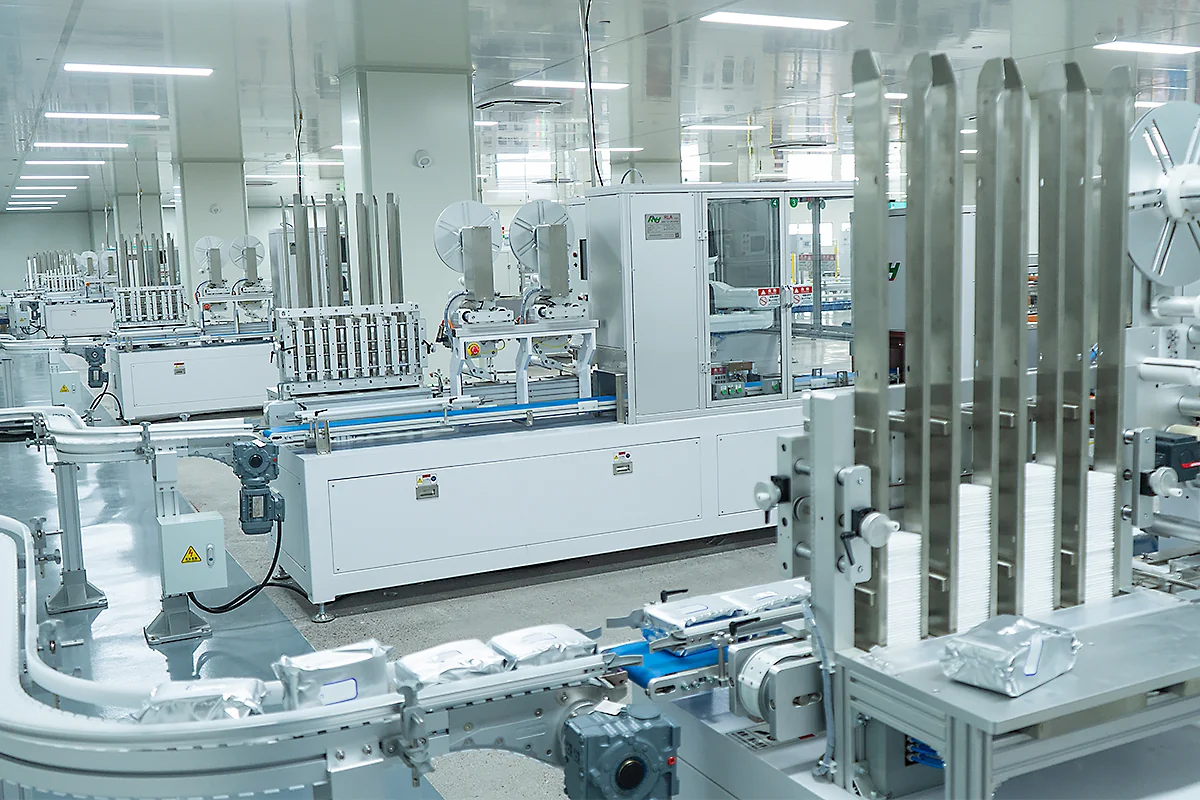



In the wet wipes industry, noise control is often overlooked during early equipment selection, yet it directly affects daily operations and long-term working conditions. As ZLINK, we regularly discuss this topic with wet wipes manufacturers who are planning to invest in a wet tissue machine for continuous, high-speed production. In real production environments, noise mainly comes from mechanical transmission, pneumatic movement, and downstream packing processes. A well-designed system balances speed with structure stability, allowing the equipment to operate within a manageable noise range while maintaining production efficiency and consistent output quality.
Understanding Noise Levels in High-Speed Operation
For a modern high-speed wet tissue machine, noise levels are influenced by drive system design, frame rigidity, and motion coordination. Servo-driven systems generally run more smoothly than traditional mechanical drives, reducing vibration and sudden impact sounds. In addition, enclosed structures and optimized airflow layouts help limit unnecessary noise dispersion. When evaluating a wet wipe solution, manufacturers should look beyond headline speed figures and consider whether the equipment design supports stable, long-duration operation without excessive acoustic stress on operators or nearby workstations.
Noise Control Across the Full Production Line
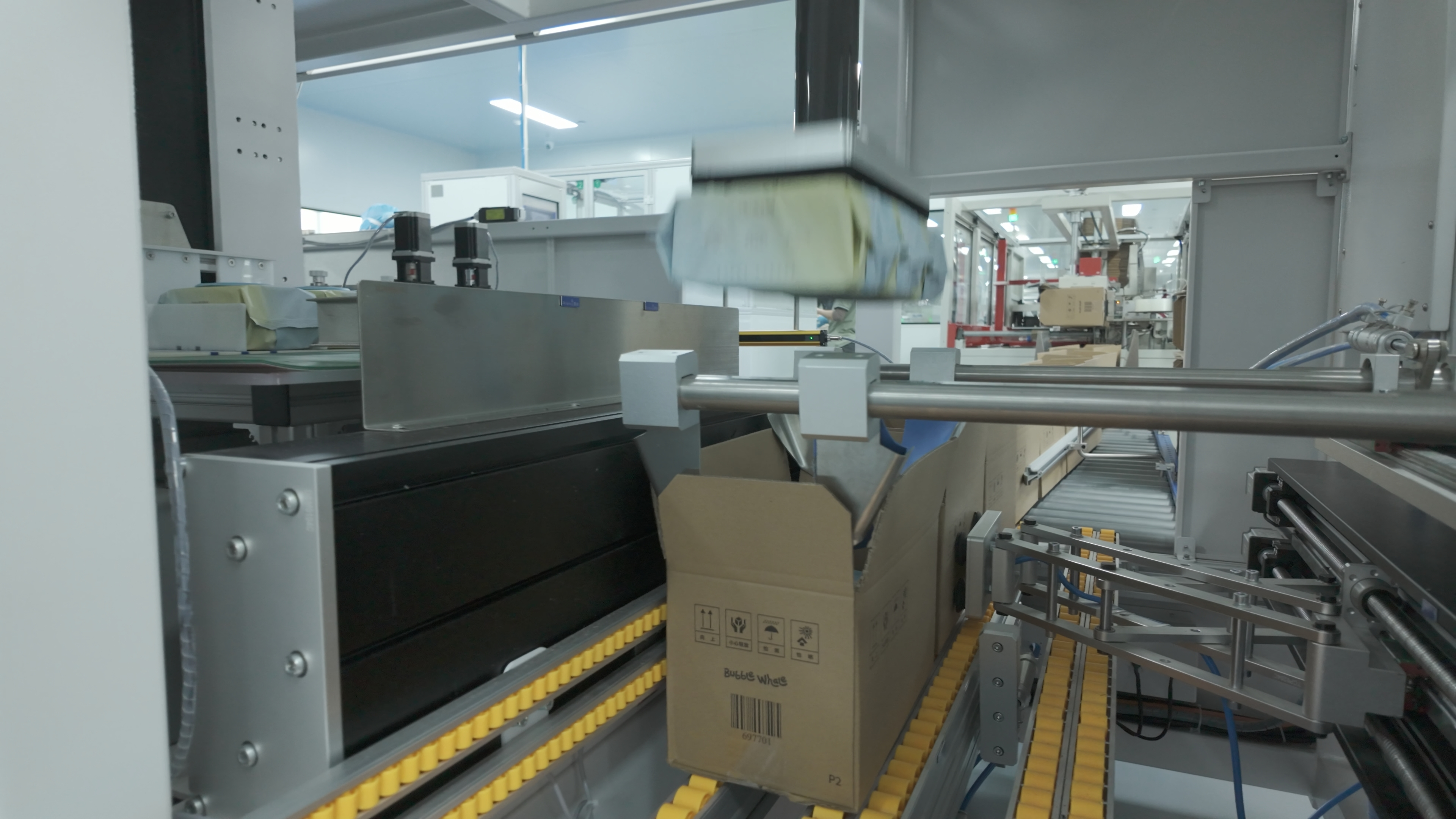
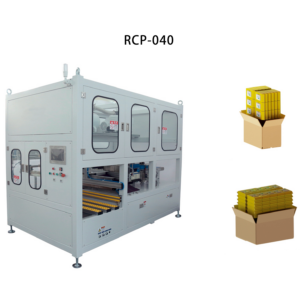
Noise is not generated by a single unit alone. It often accumulates across the entire production line, especially at the end-of-line packing stage. In our projects, we integrate automated packing systems such as the ZLINK RCP-040 Robotic Case Packer for Wet Wipes as part of a unified wet wipe solution. This fully automatic system completes case unpacking, filling, and sealing through coordinated robotic motion, reducing manual handling and minimizing irregular noise caused by inconsistent operation. Intelligent counting, online removal, and sealing detection functions further support smooth, predictable line performance.
Operational Value Beyond Decibel Numbers
Our machines are designed for long-term use, with a typical service life of ten years under proper maintenance. When a wet tissue machine operates smoothly, noise becomes a manageable background factor rather than a daily disruption. This practical approach helps production managers focus on output consistency, quality control, and delivery schedules rather than frequent operational adjustments.
Conclusion: Balancing Speed, Stability, and Work Environment
In high-speed wet wipes manufacturing, noise level is best understood as part of overall system performance rather than an isolated metric. A carefully engineered wet wipe solution combines coordinated motion, durable structure, and automated end-of-line packing to support efficient production with controlled operational noise. As ZLINK, we view noise management as a result of thoughtful system integration, helping wet wipes manufacturers create reliable, long-term production lines that align with real factory needs.